2. Explain - Robot Body Design
Definitions change over time
The definition of a robot changes over time. There was a time when people considered their dishwasher a robot - some still do! A simple and potentially abstract way of thinking about a robot is that it exists in our physical world (not digital) to perform a particular task. When you think of it that way, a dishwasher is still a robot. Think about how you would define what is and isn’t a robot.
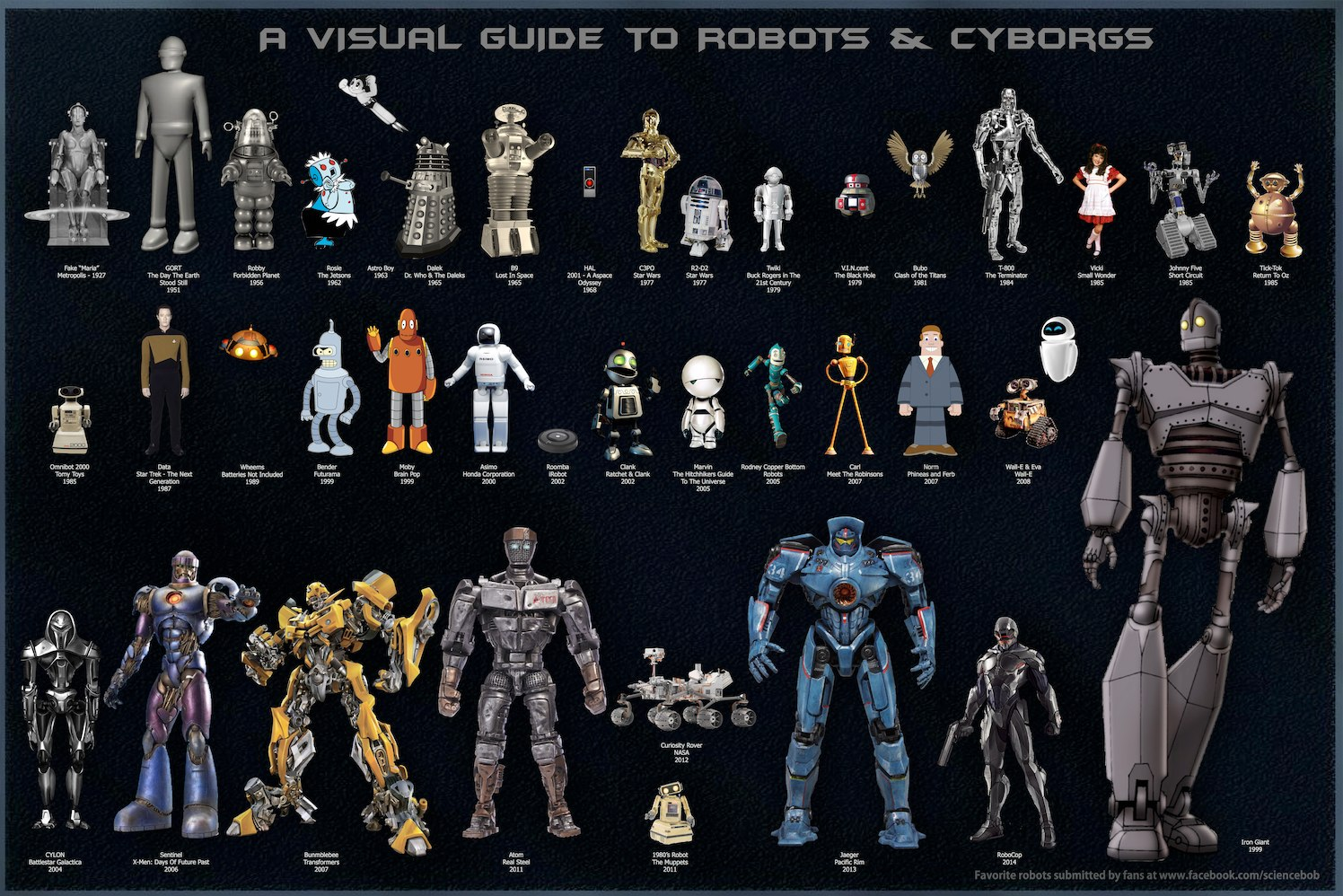
There are many variations of robots. For example, there are robots that work on production lines, social robots, and assistive robots. We’ll look at a variety of different robots, but before we do, we will discuss aspects of robot design to consider and the impacts of those choices.
Impact of design choices
When designing a robot body, you must consider many elements including:
- sensors
- size
- capabilities
Sensors
- What sensors are necessary for the robot to perform its tasks? How does that change depending on how the robot body is controlled?
- What are the implications of adding certain sensors, such as cameras or microphones, on robots?
Size
- How should we decide the robot’s size?
- How does robot size affect cost?
- How does robot size affect how it is perceived?
Capabilities
- What capabilities should the robot have to perform its tasks?
- What are the implications or consequences of adding those capabilities?
Interactive Examples
Examine some robots and discuss why designers may have made the decisions they did. Consider reviewing the ABOT Database or the Robots Explorer for images of robots. An important aspect of robots is seeing them interact however, so we’ve included some videos below for you to check out:
Relevant Videos:
Robots
- Arms
- Animal-like (Zoomorphic)
- Social Robots
- Humanoids
Key Resources:
Task
I have reviewed the ABOT DatabaseTask
I have reviewed the videos above